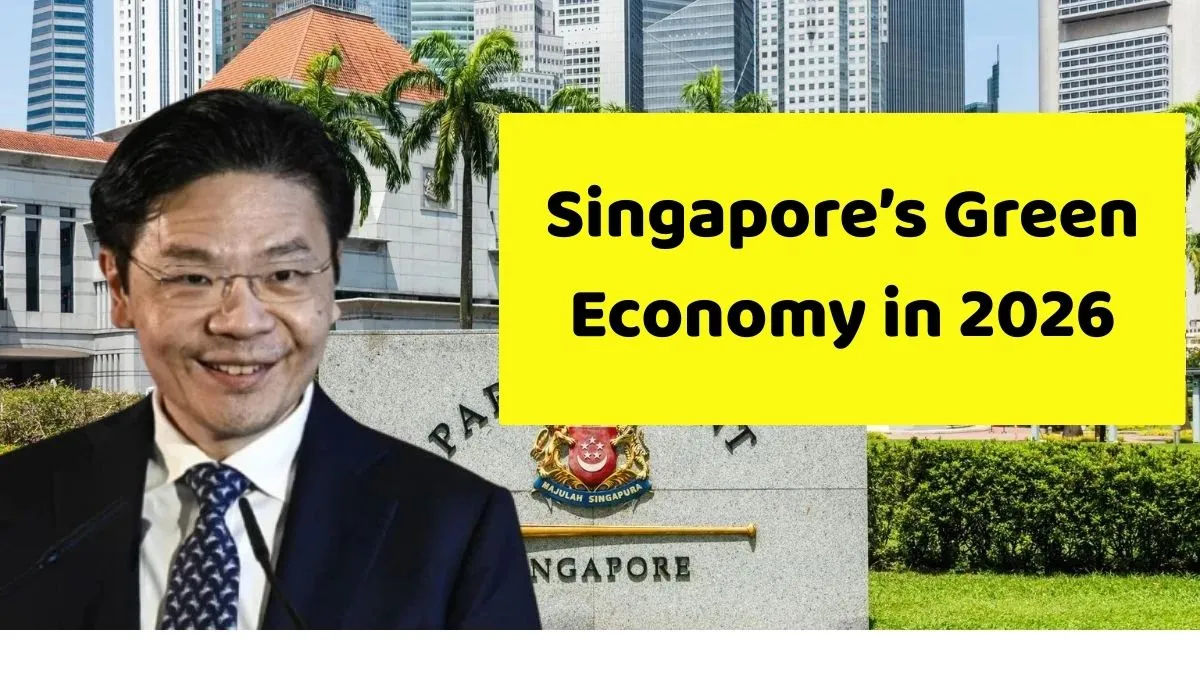
Singapore’s Green Economy in 2026: By 2026, Singapore is moving toward becoming a global model for the green economy, where balancing growth with environmental protection is a top priority. Solar panels installed on high-rise buildings are not only generating electricity but also reducing overall energy consumption. Electric vehicles are quietly moving through greener urban spaces, and from the government to the private sector, sustainable thinking is being adopted at every level. The foundation of this transformation is the Singapore Green Plan 2030.
Key Milestones of the Green Plan 2030
Under the Green Plan, Singapore aims to reduce waste sent to the Semakau Landfill by 20 percent by 2026, keeping total waste within 80 percent of current levels. This marks a strong first step toward the larger goal of a 30 percent reduction by 2030. Through a circular economy model, the focus is on reducing waste while encouraging the reuse of resources.
Carbon Tax to Shift Industry Behavior
To accelerate the green transition, carbon pricing has been made a powerful policy tool. In 2026, the carbon tax will rise to $45 per ton, up from $25 earlier. This increase is expected to strongly motivate industries to adopt low-carbon technologies and increase investment in clean energy solutions.
Strong Focus on Clean Energy and Electric Mobility
Singapore is making rapid progress in renewable energy. By 2026, solar energy capacity is expected to reach 2 GWp, enough to supply electricity to a large number of homes throughout the year. Floating solar farms and rooftop solar panels are becoming increasingly common.
To promote electric vehicles, the registration of new diesel vehicles and taxis will be phased out after 2025. EV charging facilities are being developed across all HDB towns, with a target of 60,000 charging points by 2030. This expansion will make the transport system cleaner and quieter.
Key Green Economy Targets for 2026
A 20 percent reduction in waste will extend the lifespan of landfills and boost recycling efforts. A carbon tax of $45 per ton will accelerate low-carbon investments. Increased solar capacity will help deliver clean energy to millions of homes by 2030. The expansion of EV infrastructure will green both public transport and private travel, while new and upgraded green parks will strengthen urban biodiversity.
New Opportunities in Green Finance and Innovation
Alongside these initiatives, Singapore is emerging as a major hub for green finance. Programs such as enterprise sustainability initiatives are helping companies adopt sustainable business models. This is creating new jobs in carbon trading, clean technology, and research. In 2026, discussions on green economy partnerships with countries like Chile and New Zealand are expected to further strengthen this direction.
A Strong Step Toward a Sustainable Future
In 2026, Singapore’s green economy demonstrates that economic growth and environmental protection can go hand in hand. Cleaner air, greener cities, and new economic opportunities are directly benefiting citizens. As Singapore moves toward its net-zero goal by 2050, its practical and forward-looking model continues to inspire the world.